2K Injection Molding: Complete Guide to Benefits, Design & Cost Reduction
By Senior Molding Engineer Team | Updated MAy 2026 | Reading time: 8 min
In short: 2K (two-component) injection molding combines two different materials (e.g., hard ABS + soft TPE) in one automated cycle. It eliminates secondary assembly, improves grip/ergonomics, and lowers part cost by 20–40% for high-volume production. Request a free DFM analysis →
The chemical bonding of the 2 components occurs because they merge into one another or because the first component is constructed in such a way that the second component bonds mechanically. Sometimes it is desirable that the two materials do not adhere to each other. As a result, play-free parts can be “mounted” in the mold. Our specialists will be happy to advise you on what is most feasible for you.
What is 2K Injection Molding? (Technical Definition)
2K injection molding, also known as two-component, dual-shot, or bi-injection molding, is a specialized process where two different thermoplastic materials (or colors) are injected into a single mold sequentially or simultaneously. The result is a single, integrated part with multiple properties—e.g., a rigid base with a soft-touch seal, or transparent windows within a colored housing.
How Does 2K Molding Work? (The 3 Main Methods)
Unlike simple overmolding (where a soft material is manually placed over a pre-molded part), true 2K molding is fully automated. The three most common machine configurations are:
- Rotary Platen (Index Plate): The mold rotates 180° between two injection units. First shot forms the substrate; second shot injects the second material onto it.
- Core Back Technology: A sliding core retracts after the first shot, creating new cavity space for the second material.
- Transfer (Pick & Place): A robot transfers the first component to a second cavity—slower but lower tooling cost.
At Injection Molds China, we specialize in rotary platen 2K molding on Engel and Arburg machines, achieving cycle times as low as 25 seconds for medium-complexity parts.
Key Benefits of 2K Injection Molding (With Data)
1. Eliminates Secondary Assembly → 30-50% Cost Reduction
Traditional “two-shot” production requires molding Part A, storing it, then manually placing it into a second mold for overmolding. 2K integrates both steps. A 2023 benchmarking study found that switching from insert overmolding to 2K reduced unit costs by 38% for a power tool grip due to eliminated labor and reduced floor space.
2. Superior Bonding vs. Mechanical Assembly
2K achieves chemical bonding (molecules cross-link) or interlocking mechanical bonding (first part designed with undercuts). This results in peel strengths 4-7x higher than adhesives or snap-fits. For applications like waterproof seals, this is critical.
3. Consistent Quality & Zero Insertion Errors
Manual insert overmolding has a typical defect rate of 1-3% (misplaced inserts, flash). 2K’s automated process runs at >99.7% yield after process optimization—vital for medical or automotive safety parts.
4. Enhanced Ergonomics & Aesthetics
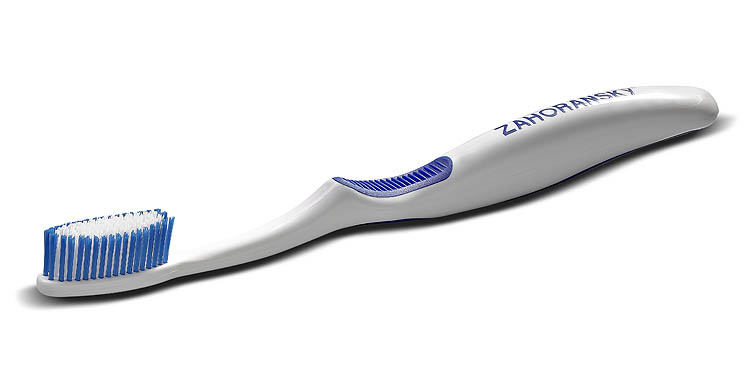
Combine rigid structures (e.g., glass-filled nylon) with soft-touch TPE or silicone. Examples: toothbrush handles, screwdriver grips, or automotive dashboards with integrated airbag seams.
Pro Tip: For maximum bond strength, ensure your two materials are “compatible.” Common pairs: PC+ABS + TPE, PP + TPE, PA6 + silicone. Avoid incompatible combos like PC + PE – they will delaminate.
Common 2K Material Combinations (Reference Table)
Use this table when selecting your materials. We provide free compatibility testing for new combinations.
| First Component (Substrate) | Second Component (Overmold) | Typical Application | Bond Type |
|---|---|---|---|
| ABS | TPE (Santoprene) | Power tool handles, remote controls | Chemical |
| PC/ABS | TPU (Purethane) | Mobile phone cases, wearables | Chemical |
| Nylon (PA6) | Silicone (LSR) | Seals, gaskets, medical devices | Mechanical |
| POM (Delrin) | TPE | Gears with soft rims, rollers | Mechanical |
| PMMA (Acrylic) | ABS | Transparent window + colored frame | Chemical |